





SARM Showdown: Best SARMs for Cutting — Ostarine vs Cardarine vs Stenabolic
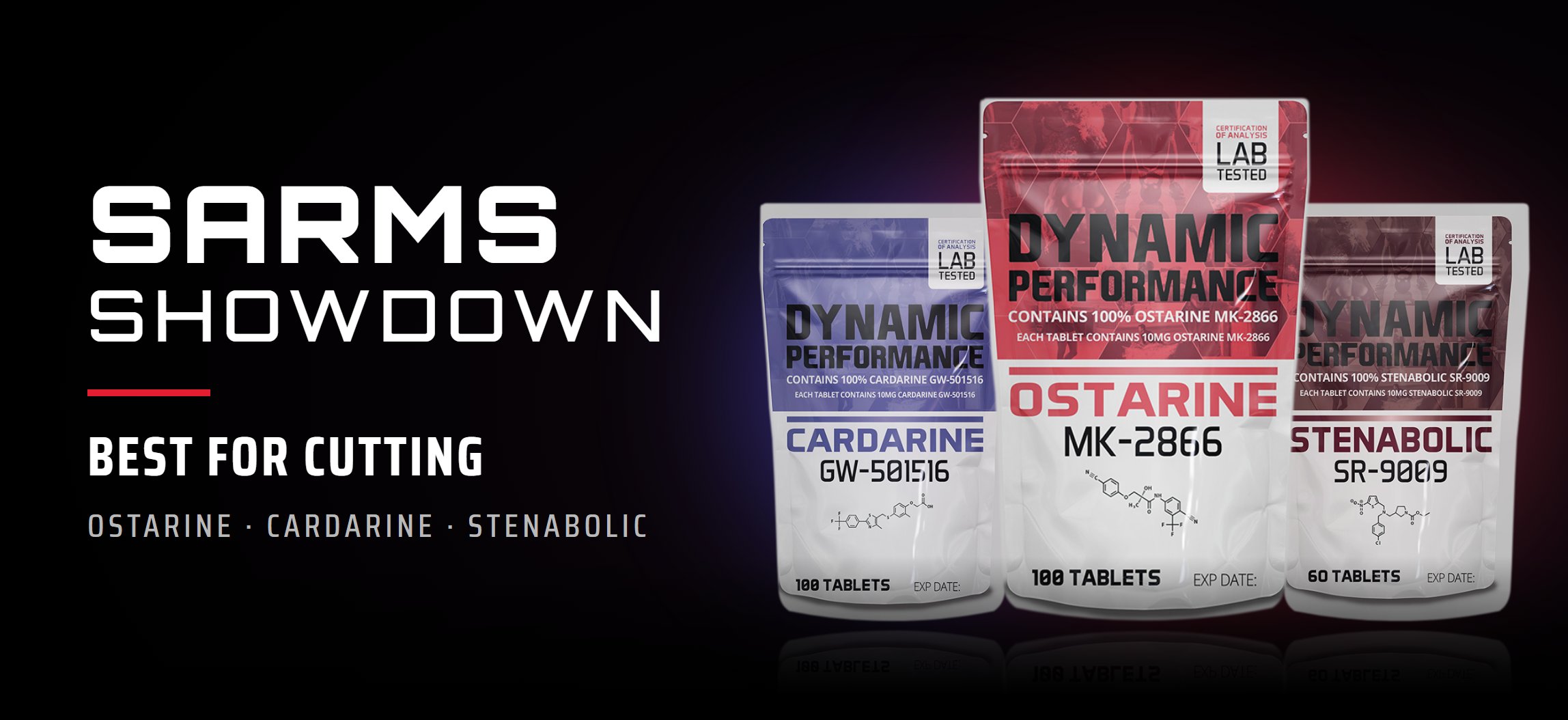
Our last Showdown covered the strength compounds: S-23, YK-11 and RAD-140. This one covers the other end of the spectrum. When the research focus is fat loss, body recomposition or endurance, three compounds come up more than any others: Ostarine (MK-2866), Cardarine (GW-501516) and Stenabolic (SR9009).
Only one of them is actually a SARM. Cardarine and Stenabolic are often grouped with SARMs, but they act on completely different targets in the body. That difference is the main point of this comparison. We look at what each compound is, how it works and what the published research says. Then we compare them side by side for cutting-focused research.
All information is for educational and research purposes only.
Ostarine (MK-2866) — The Lean Tissue Preserver
Ostarine, also known as enobosarm, is a non-steroidal selective androgen receptor modulator. It was originally developed by GTx Inc. It binds to the androgen receptor, and it was designed to act mainly on muscle and bone and much less on tissues such as the prostate.
Ostarine is one of the most studied SARMs in humans. A double-blind, placebo-controlled Phase II trial in healthy elderly men and postmenopausal women (Dalton et al., 2011) reported increases in lean body mass and improvements in a stair-climb test of physical function compared with placebo. It was later tested in Phase III trials for muscle wasting in lung cancer patients. More recently, Veru Inc. has studied it alongside GLP-1 weight-loss drugs, looking at whether it can reduce the loss of lean tissue that usually comes with rapid weight loss.
That is why Ostarine suits cutting research. It doesn't burn fat directly. Its research value is keeping lean tissue in the face of a calorie deficit.
Key research considerations: Like every compound that acts on the androgen receptor, Ostarine has been shown to suppress natural hormone levels in a dose-dependent way. Case reports of liver injury linked to SARM products have also been published. It has not been approved as a medicine anywhere in the world.
Cardarine (GW-501516) — The Metabolic Switch
Cardarine is not a SARM. It is a PPARδ (peroxisome proliferator-activated receptor delta) agonist. It was developed in the 1990s by GlaxoSmithKline and Ligand Pharmaceuticals as a potential treatment for metabolic and cardiovascular conditions.
PPARδ is a nuclear receptor that controls genes involved in burning fat for energy. When it is activated, cells shift towards using fatty acids as fuel. A widely cited study in mice (Narkar et al., 2008, Cell) found that Cardarine combined with an AMPK activator greatly increased running endurance. This led to Cardarine being called an "exercise mimetic."
For cutting research, Cardarine is the fat-oxidation and endurance compound of the three. It works on how the body uses energy, not on muscle tissue.
Key research considerations: GSK stopped developing Cardarine in 2007 after long-term, high-dose studies in rodents found cancers in several organs. In 2013, WADA took the unusual step of issuing a public warning about it. Researchers should know this history.
Stenabolic (SR9009) — The Circadian Regulator
Stenabolic is also not a SARM. It is a synthetic agonist of Rev-Erb, a nuclear receptor that is part of the body's internal circadian clock. It was developed at the Scripps Research Institute.
The key paper is a 2012 study in Nature (Solt et al.). Mice given SR9009 by injection showed higher energy expenditure, less fat mass and changes in how muscle and liver tissue handled glucose and lipids. Follow-up animal work suggested it also increased mitochondrial content in skeletal muscle and improved running capacity.
For cutting research, Stenabolic is the metabolic rate and circadian metabolism compound. It also comes with more open questions than the other two.
Key research considerations: SR9009 has very low oral bioavailability. The major animal studies used injection, not oral administration. A 2019 study (Dierickx et al., PNAS) also found that some of SR9009's effects still occurred in cells lacking Rev-Erb. This suggests its mechanism may be less clear-cut than first thought. There is no human clinical data.
Cutting Comparison
| Ostarine (MK-2866) | Cardarine (GW-501516) | Stenabolic (SR9009) | |
|---|---|---|---|
| Class | Non-steroidal SARM | PPARδ agonist | Rev-Erb agonist |
| Acts on androgen receptor? | Yes | No | No |
| Primary research focus | Keeping lean mass | Fat oxidation, endurance | Energy expenditure, circadian metabolism |
| Human clinical data | Phase II and III trials | Early-phase trials only | None |
| Effect on natural hormones | Suppression reported | Not an androgen receptor mechanism | Not an androgen receptor mechanism |
| Most notable caution | Hormone suppression, liver case reports | Rodent carcinogenicity findings | Poor oral bioavailability, unclear mechanism |
Best documented in humans: Ostarine. It has the deepest clinical research base of any compound in this Showdown.
Most direct metabolic effect: Cardarine. Its fat-oxidation mechanism is well described, although the safety history has to be weighed against it.
Most experimental: Stenabolic. The research is interesting but almost all of it comes from animal and cell studies.
Which Compound Fits Which Research Goal
- Keeping lean tissue during a calorie deficit: Ostarine. It is the only one of the three that acts on muscle through the androgen receptor.
- Fat oxidation and endurance capacity: Cardarine. Its whole mechanism is about switching fuel use towards fat.
- Circadian biology and metabolic rate: Stenabolic. It is most relevant where the research question involves the body clock.
These three are often grouped together because they work in different ways. Ostarine acts on muscle tissue, Cardarine on how fuel is used and Stenabolic on metabolic rhythm. For a closer look at the two non-SARMs, see our earlier post, SARM Showdown: Stenabolic vs Cardarine.
The Verdict
There is no single "best SARM for cutting". Only one of these compounds is a SARM, and each targets a different part of the fat-loss picture. The right choice depends on the question the research is trying to answer.
Whichever compound you research, purity is essential. Independent lab reports for our range are available on our Independent Analysis page.
Further reading
- Dalton JT et al. (2011). The selective androgen receptor modulator GTx-024 (enobosarm) improves lean body mass and physical function in healthy elderly men and postmenopausal women. J Cachexia Sarcopenia Muscle.
- Narkar VA et al. (2008). AMPK and PPARδ agonists are exercise mimetics. Cell.
- Solt LA et al. (2012). Regulation of circadian behaviour and metabolism by synthetic REV-ERB agonists. Nature.
- Dierickx P et al. (2019). SR9009 has REV-ERB–independent effects on cell proliferation and metabolism. PNAS.
All products sold by Peak Body are strictly for research purposes only and are not intended for human consumption.