




Advice & Tips
-
September 18, 2026
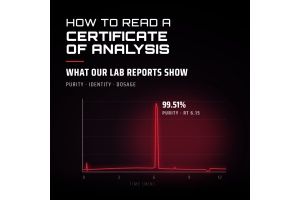
Every product on our Independent Analysis page has one or more Certificates of Analysis (CoAs) from MZ Biolabs, an independent analytical laboratory in Tucson, Arizona. We publish them so you don't have to take our word for what's in the vial or tablet.
A CoA is only useful if you know how to read it. This guide goes through one of our reports section by section, explains what each number means and shows you how to check that a CoA, ours or anyone else's, is genuine.
We'll use our Ostarine (MK-2866) report, analysed March 2023, as the worked example. Open it alongside this post and follow along.
All information is for educational and research purposes only.
Open the Ostarine CoA alongside this guideClose the Ostarine CoA
Open in a new tab ↗1. The Header: Who Tested It and Who For
At the top of every report you'll see:
- The laboratory: MZ Biolabs, with its full address and contact details.
- The client: Peak
-
September 01, 2026
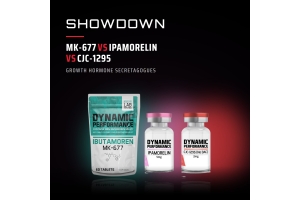
MK-677 has appeared in our SARM Showdowns twice already, against RAD-140 and against Cardarine. Each time we pointed out that it isn't actually a SARM. It is a growth hormone secretagogue: a compound that prompts the body to release more of its own growth hormone (GH).
It isn't the only one. Two peptides, Ipamorelin and CJC-1295, act on the same system but in different ways. This three-way Showdown compares the oral option against the two peptide options.
All information is for educational and research purposes only.
First, How Growth Hormone Release Works
The pituitary gland releases growth hormone in pulses, mostly during deep sleep. Three signals control
-
August 03, 2026
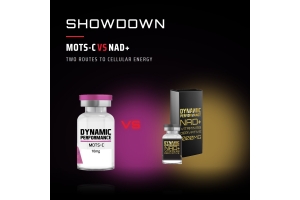
Mitochondria, the parts of the cell that produce energy, are one of the busiest areas of performance and longevity research. Two names now come up in almost every discussion: MOTS-c and NAD+.
Both are linked to cellular energy, metabolism and age-related decline, and they are often mentioned together. But one is a peptide made by the mitochondria and the other is a coenzyme the mitochondria depend on. This Showdown explains how they differ and why they are more complementary than competing.
All information is for educational and research purposes only.
MOTS-c — The Mitochondria's Own Messenger
What it is: MOTS-c is a 16-amino-acid peptide. Unusually, it is encoded by mitochondrial DNA, not the DNA in the cell nucleus. It was discovered in 2015 and belongs to a newly recognised class called mitochondrial-derived peptides.
How it works:
-
July 07, 2026
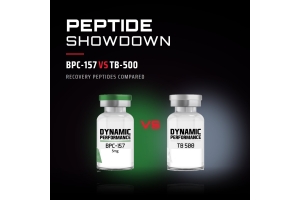
Our SARM Showdown series has become some of the most-read content on the Peak Body blog, so we're bringing the same head-to-head format to peptides. What better place to start than the two names that come up in every recovery discussion: BPC-157 and TB-500?
They are often mentioned together, and sometimes as if they were interchangeable. In fact they come from very different sources, are thought to work in different ways and have different kinds of research behind them.
All information is for educational and research purposes only.
BPC-157 — The Gut-Derived Healing Peptide
What it is: BPC-157 ("Body Protection Compound") is a 15-amino-acid peptide. Its sequence is taken from a protein found naturally in human gastric juice.
Research background: most BPC-157 research comes from one research group at the University
-
June 15, 2026
Across our SARM Showdown series, one question keeps coming up: what actually makes a SARM different from a steroid? On forums and social media the terms are often used as if they mean the same thing. They don't.
This guide explains the three categories: what they are made of, how they act on the body and why "selective" is the key word. It also covers several popular compounds that are usually called SARMs but aren't.
All information is for educational and research purposes only.
The Common Thread: the Androgen Receptor
All three categories involve the androgen receptor (AR). This is a protein inside cells that, when activated, switches on genes involved in muscle growth, bone density, red blood cell production and male sexual characteristics.
The androgen receptor is found throughout the body, including muscle, bone, prostate, skin, hair follicles, liver and brain. That spread is the key to the whole comparison.
-
April 06, 2026
Our last Showdown covered the strength compounds: S-23, YK-11 and RAD-140. This one covers the other end of the spectrum. When the research focus is fat loss, body recomposition or endurance, three compounds come up more than any others: Ostarine (MK-2866), Cardarine (GW-501516) and Stenabolic (SR9009).
Only one of them is actually a SARM. Cardarine and Stenabolic are often grouped with SARMs, but they act on completely different targets in the body. That difference is the main point of this comparison. We look at what each compound is, how it works and what the published research says. Then we compare them side by side for cutting-focused research.
All information is for educational and research purposes only.
Ostarine (MK-2866)
-
March 13, 2026
Choosing a tablet format for peptide delivery is a conscious and deliberate decision. It reflects a focus on reliability, performance, and scientific precision. While capsules are common in supplements and medications, tablets offer clear advantages when the goal is to deliver delicate molecules like peptides using advanced oral absorption technology.
Peptides are sensitive molecules. They can be broken down easily by stomach enzymes and acidic conditions before they ever reach the bloodstream. Because of this, delivering peptides by mouth has traditionally been difficult. Many peptide medicines have historically required injections.
Modern pharmaceutical science has changed that. Researchers have developed tablet systems that include a small-molecule permeation enhancer. This compound temporarily creates a more favorable environment
-
November 24, 2025
When people look for strength-focused SARMs, three compounds are mentioned more than any others: S-23, YK-11 and RAD-140. Each is known for strong performance outcomes in research environments, but they achieve this in different ways.
This breakdown looks at what each compound is, how it is commonly discussed in the research community, and how they compare side by side for strength-focused goals.
Disclaimer: All information is for educational and research purposes only.
S-23 - High-Power Selective Androgen Receptor Modulator
S-23 is often described as one of the most potent SARMs investigated so far. It shows a strong affinity for the androgen receptor and is typically associated with:Highly anabolic activity in research
Notable strength improvements within short timeframes (commonly referenced anecdotally)
A dry, dense, hardened -
November 01, 2024
This month, we're comparing the the dynamic performance stacked sarms.
When it comes to maximizing performance, muscle growth, and fat loss, the Chimera, Minotaur, and Griffin stacks have carved out a reputation in the realm of SARMs (Selective Androgen Receptor Modulators). Each stack targets specific fitness goals, making them popular among athletes and bodybuilders. But which one is the best fit for your needs? In this article, we’ll pit these three powerhouse stacks against each other, comparing their strengths, use-cases, and potential side effects.
Chimera: The Ultimate All-Rounder
-
October 01, 2024
When it comes to maximizing muscle growth and strength, both YK-11 and LGD-4033 (Ligandrol) are among the most potent SARMs (Selective Androgen Receptor Modulators) available. Despite their similarities in promoting lean muscle mass, they differ significantly in their mechanisms of action, side effects, and specific use-cases. In this article, we’ll break down the key differences between YK-11 and LGD-4033 to help you choose the right one for your muscle-building goals.
YK-11: The Myostatin Inhibitor with Extreme Muscle-Building Potential
Primarily Known For: Myostatin Inhibition & Muscle Hypertrophy
YK-11 is a unique SARM with a dual mechanism of action. It not only binds to androgen receptors to promote muscle growth like other SARMs but also acts as a myostatin inhibitor. Myostatin is a protein that limits muscle growth, and by inhibiting it,